Roof Care Guide
How to Remove Moss From a Roof Safely
Moss looks harmless, but left alone it lifts tiles, blocks valleys and holds water against the roof deck. The good news: it can be removed properly without ever setting foot on a pressure washer trigger.
Why pressure washing damages roofs
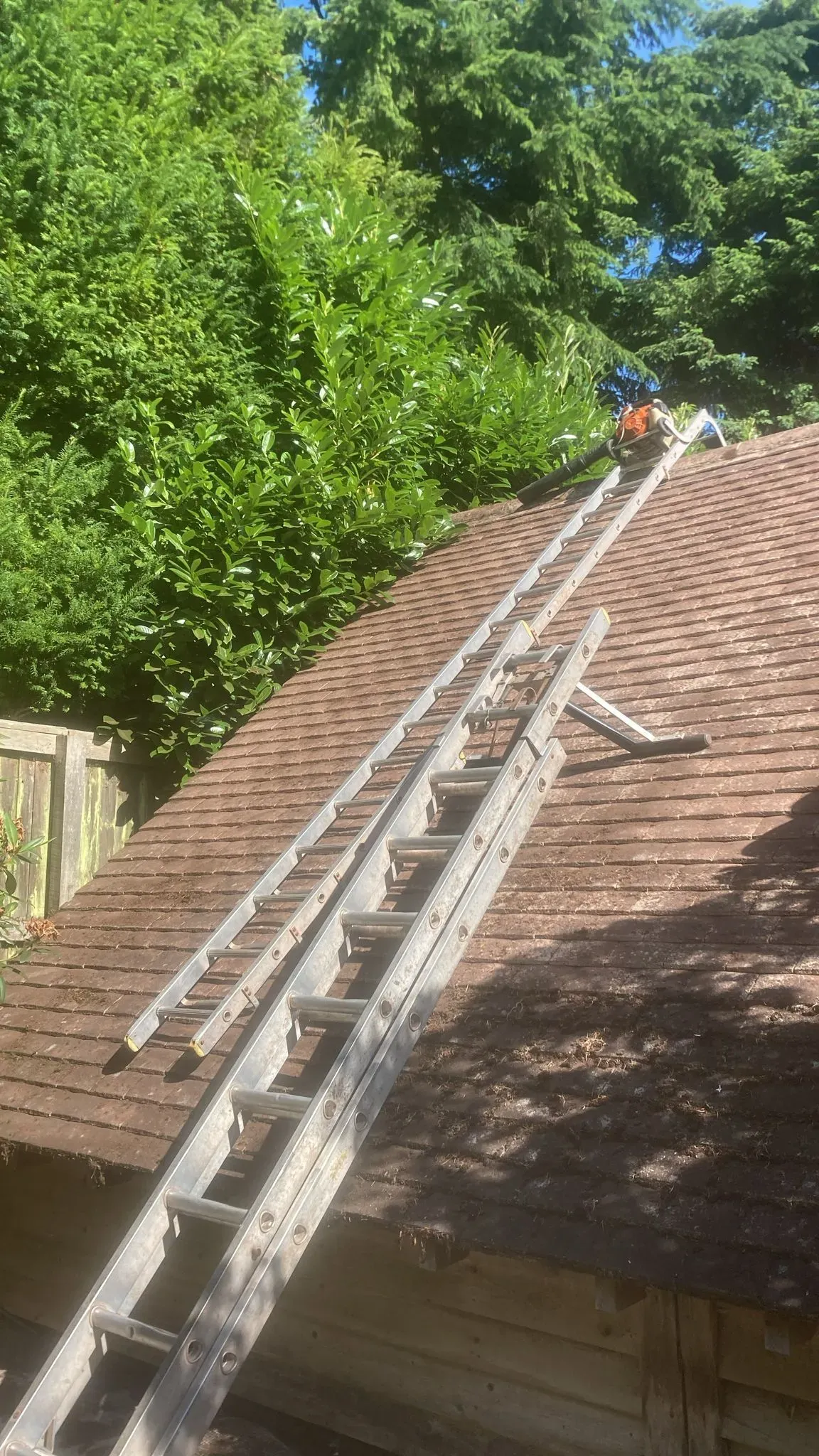
High-pressure water strips the protective coating from concrete tiles, forces water under laps and can shift or crack older tiles. It also removes moss so aggressively that the roof usually looks worse a season later. This is why we never pressure wash tiled roofs.
The safe, roof-friendly method
- 1. Inspect first. Check tile condition, flashings and valleys before any work starts. Loose or cracked tiles are noted and dealt with.
- 2. Manual scraping. Moss is carefully hand-scraped off tile by tile, working down the roof so debris falls into gutters rather than back onto clean areas.
- 3. Clear valleys and gutters. All debris is removed from valleys, hips and gutters — this is where blockages start.
- 4. Apply a biocide treatment. A soft-applied biocide kills residual spores and slows regrowth for months to years.
- 5. Tidy up. Grounds are cleared, debris bagged, and before/after photos shared.
Avoid these common mistakes
- Never use a pressure washer on tiles or slates.
- Don't skip a biocide — moss will return within a season.
- Work top-down so debris doesn't recontaminate cleaned areas.
- Always work from a properly rated ladder or tower — never freehand.
How long does the result last?
With manual removal plus a biocide treatment, most roofs stay clear for several years. A quick biocide top-up every 2–3 years keeps the roof looking pristine without ever needing another full clean.
Pristine Roof Cleaning Solutions is fully insured to £5,000,000 public liability and covers Hampshire · Surrey · Sussex.