
1930s Semi · Midhurst GU29
1930s Semi roofs, Midhurst — done the right way
1930s semis and Midhurst go together — the town has a lot of them, particularly around Cowdray Ruins, and they share a set of roofing quirks that are worth understanding before anyone climbs a ladder. The classic 1930s semi has a 35°–40° pitch with a prominent front gable, twin bays, and often a shared valley or party wall running down the centre of the block.
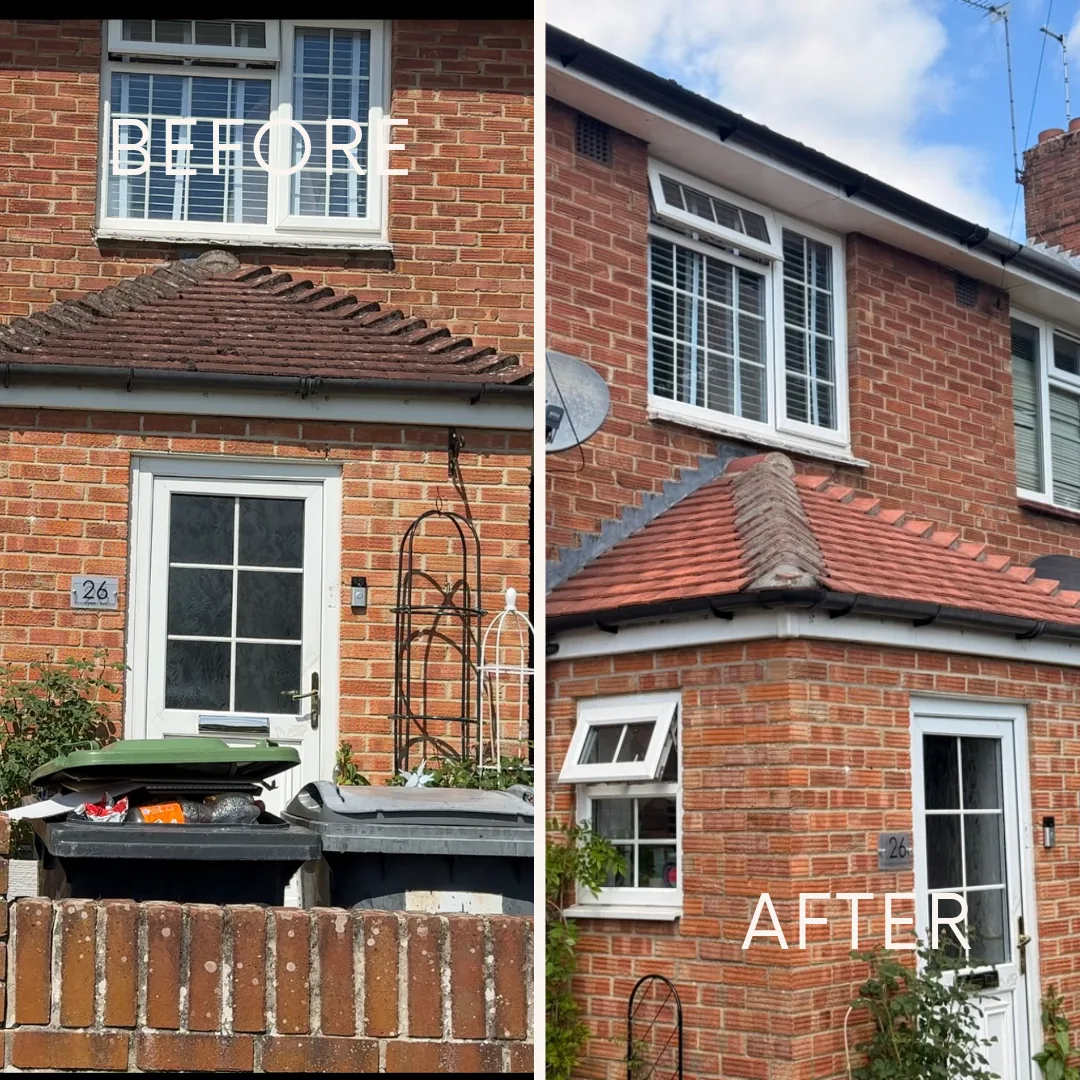
1930s semis and Midhurst go together — the town has a lot of them, particularly around Cowdray Ruins, and they share a set of roofing quirks that are worth understanding before anyone climbs a ladder. The classic 1930s semi has a 35°–40° pitch with a prominent front gable, twin bays, and often a shared valley or party wall running down the centre of the block. Midhurst has an unusually high share of listed and conservation-area roofs, with handmade clay peg tiles and Horsham stone still in service on many buildings, and roofs here sit in a river valley with heavy autumn leaf fall from mature estate trees.
How 1930s semi-detached houses actually behave on a roof
The classic 1930s semi has a 35°–40° pitch with a prominent front gable, twin bays, and often a shared valley or party wall running down the centre of the block.
Typical tile stock in Midhurst: original clay double-Roman tiles; concrete interlocking replacements on re-roofed halves; handmade clay pantiles on rarer stock.
Semis are almost always accessed from the front garden with a roof ladder over the ridge, and side alley access needs a quick check before quoting.
Method notes for 1930s semi-detached houses
On a 1930s semi we survey the neighbour's half from ground level first — a shared valley or party-wall flashing failure on their side will show up as damp on yours, and it changes what we quote for.
Gutters on 1930s semi-detached houses
1930s semis often have mismatched guttering between the two halves, which means the join over the party wall is a common leak point that shows up as a damp patch on an internal chimney breast.
Honest pricing shape
1930s semis quote very consistently for cleaning because the geometry is standardised, but repair costs vary widely depending on whether the front bay lead has been touched in the last 30 years.
Where 1930s semi-detached houses tend to fail
- cracked original clay tiles that get worse each frost cycle
- front-bay flat lead top failures where the pitch meets the bay window
- shared party-wall stack flashings that were never touched in one lifetime
- half-round original guttering that no longer matches the neighbour's newer PVC run
1930s semi-detached houses in Midhurst
Midhurst has an unusually high share of listed and conservation-area roofs, with handmade clay peg tiles and Horsham stone still in service on many buildings. That's why our approach to a 1930s semi on a street near Cowdray Ruins isn't the same as a 1930s semi on the estate edge.
Also covering
We work on 1930s semi-detached houses across Petworth (6 mi), Petersfield (10 mi), Chichester (12 mi), Haslemere (10 mi), Liss (12 mi) on the same route.
Frequently asked
Do you clean the neighbour's half of a semi at the same time?
Only if they instruct us — we can quote both sides together which usually works out cheaper per half, but we never step across a boundary without written permission. In Midhurst specifically, roofs here sit in a river valley with heavy autumn leaf fall from mature estate trees, so we plan the visit around that reality.
Are original 1930s clay tiles worth cleaning?
Almost always yes — original hand-made clay comes back beautifully with soft wash and vastly outlasts modern concrete, so cleaning them is far better than replacing them. In Midhurst specifically, roofs here sit in a river valley with heavy autumn leaf fall from mature estate trees, so we plan the visit around that reality.
Can you re-bed the ridge on a 1930s semi without disturbing the neighbour's tiles?
Yes — we work carefully across the ridge line, lifting only the tiles we need to re-bed on your side, with no impact on the neighbouring half. In Midhurst specifically, roofs here sit in a river valley with heavy autumn leaf fall from mature estate trees, so we plan the visit around that reality.
Do you work on 1930s semi-detached houses across the whole GU29 area?
Yes — from streets near Cowdray Ruins out to the boundary with Petworth, we cover 1930s semi-detached houses on the same weekly route we run for the rest of Midhurst.
Get a real 1930s semi roof price for Midhurst
We'll walk the roof, photograph what's actually going on, and put a proper written price to it — usually within one working day.