Can a slate roof be cleaned?
Cleaning may be possible when the covering is sound and a suitable method can be used without damaging it. Slates with worn edges, movement or signs of fixing failure need assessment first. A weathered appearance can be part of a natural covering. Focus on accumulated growth and any defect that concerns you before deciding what the work should achieve.
Describe any leak or loose piece when you enquire. Removing surface growth cannot restore a failed fixing or make a cracked slate intact. If the right starting point is inspection or repair rather than cleaning, the difference should be discussed before work is agreed. Our inspection page explains the visual report and recommendations.
Natural slate is not a concrete tile
The fact that two roofs are pitched does not make their coverings interchangeable. Slate overlaps protect the building, and an edge can be vulnerable to force applied in the wrong direction. Hand tools used for thick growth must therefore be selected and handled with the material in mind rather than treated as a generic scraper for every roof.
We never pressure wash roof tiles or slates. Suitable hand removal needs a careful look at the material, its edges and the working position. Tell us about loose pieces or earlier repairs, and leave the covering undisturbed. The method should suit the roof condition rather than relying on force to remove every visible mark.
Distinguish moss from marks and lichen
A raised moss clump can be physically different from a flat patch of lichen or general surface discolouration. Trying to scrape every mark until the slate looks uniform may do more harm than accepting some weathering. The aim of cleaning should be stated clearly: removing accumulated growth is not the same as returning a natural material to a factory-fresh appearance.
Our moss-and-lichen guide explains how those growths differ. If you send a photograph, include the broader pitch as well as the patch that concerns you. Note where growth collects and any loose pieces visible from below. The picture helps begin the discussion; leave close inspection of overlaps and fixings to a safe assessment.
Access without walking over vulnerable slates
Do not walk on a slate roof to investigate or prepare it for cleaning. Weight on an unsuitable area may break the covering, and a apparently dry roof can still be slippery. Working near an edge is also a fall risk. A ladder at the eaves does not make a whole pitch safely accessible.
Tell us about roof height, extensions and boundaries from ground level. Access should be planned around the covering and the obstacles beneath it. A long-handled tool still needs a safe working position. Explain whether side gates are locked or a neighbouring area is needed, and leave the roof undisturbed while the appropriate approach is considered.
Whether treatment belongs in the plan
Biocide may be considered only where the product is suitable for the roof and the surroundings. It is not an automatic addition to every slate enquiry. Discuss ponds, plants, drainage outlets and any known material restrictions. The product’s instructions matter more than the assumption that a treatment used on another roof will behave identically here.
Treatment targets remaining growth and spores, while repairs address damaged roofing components. Shade and damp conditions can persist afterwards, so continue observing the covering and rainwater routes between visits. Discuss what you want the work to achieve and whether treatment suits the material. Removing growth and repairing a leak should be considered as separate objectives.
Gutters and records after moss removal
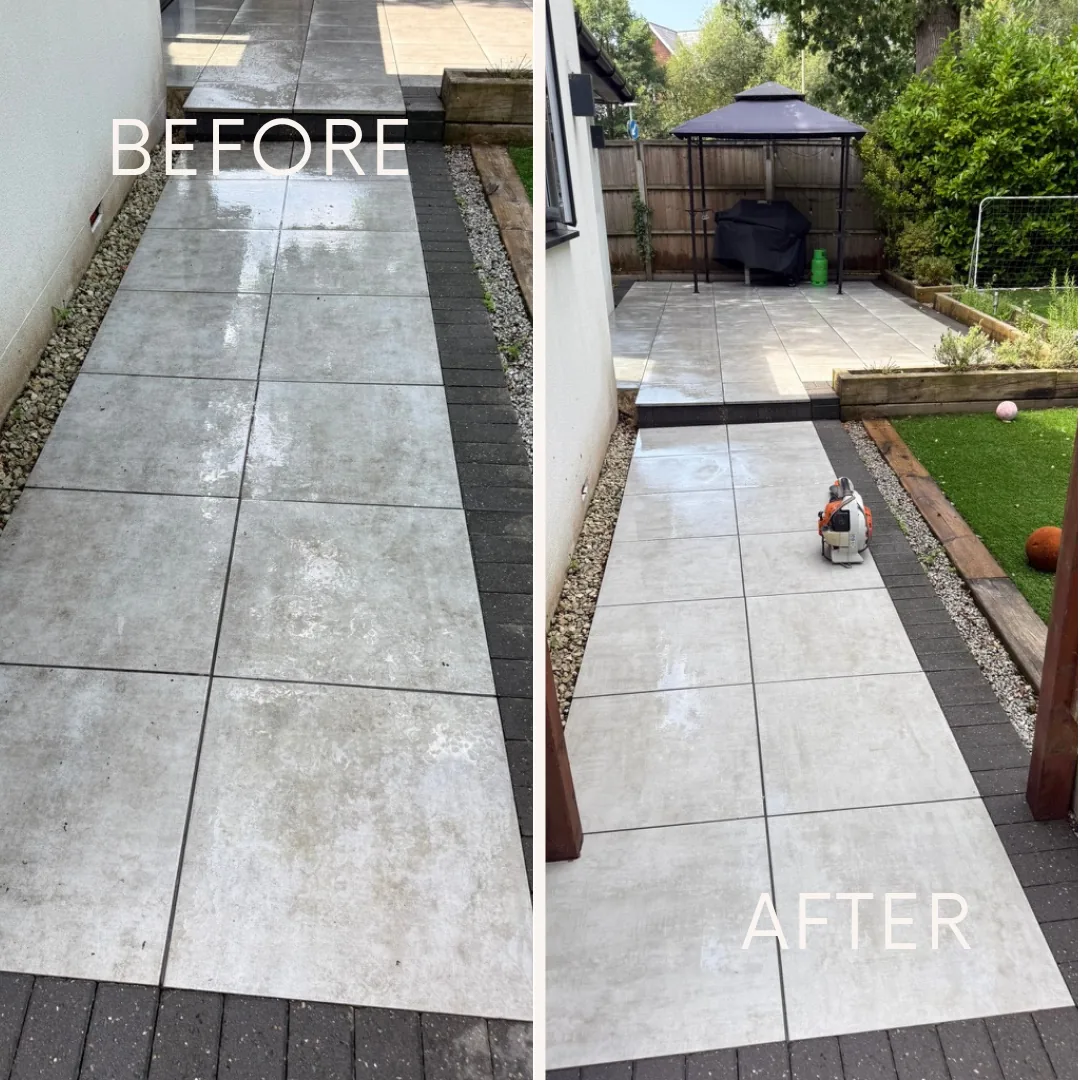
Material removed from the pitch needs collecting at the lower edge. Roof debris should be cleared from gutters and downpipes rather than left to obstruct rainwater. Before-and-after photographs help show the visible result where the roof is difficult to see from below. Keep them with your maintenance records and mention any recurring debris when discussing later checks.
For a slate roof cleaning quote, contact our Petersfield-based business with the address, known faults and safe images. We cover Hampshire, Surrey and Sussex. Explain the covering and the growth you want addressed, along with any access obstacles. If damaged pieces or a leak also need attention, include them so cleaning and repair can be discussed separately.
Common questions
How do you clean a natural slate roof?
Begin with condition and access assessment. Suitable hand removal may deal with moss, but aggressive scraping and pressure washing are not the approach described here.
Is slate roof cleaning the same as replacing slates?
No. Growth removal and repairing damaged slates or failed fixings are different tasks. Explain leaks or loose pieces when enquiring so the covering condition can be considered before cleaning.
Should every patch of lichen be scraped away?
Not automatically. Removing every visible mark can be an unsuitable goal for a fragile covering. Discuss the growth, material and intended outcome before agreeing the work.
Related reading
Based in Petersfield, working across Hampshire · Surrey · Sussex, insured to £5,000,000 public liability.