Why hand removal, not pressure washing
A high-pressure jet shifts moss quickly, which is why it's tempting. It also strips the surface from tiles, drives water up under the laps and can crack older or brittle tiles. That's why we don't pressure wash roof tiles.
Scraping by hand is slower but controlled. Each section is worked tile by tile, so moss comes away from ridges, valleys and laps without forcing anything. On roofs where it suits, a soft wash can then follow to deal with remaining algae and grime.
How a moss removal job runs
No two roofs are identical, but the sequence is broadly the same:
- A proper look at the roof first, noting the tile type and any damaged or slipped tiles
- Heavy moss scraped off by hand, working down from the ridge
- Loose debris cleared with a blower, including blocked valleys
- Gutters and downpipes emptied of the moss that has fallen into them
- A biocide treatment where needed, to kill remaining spores
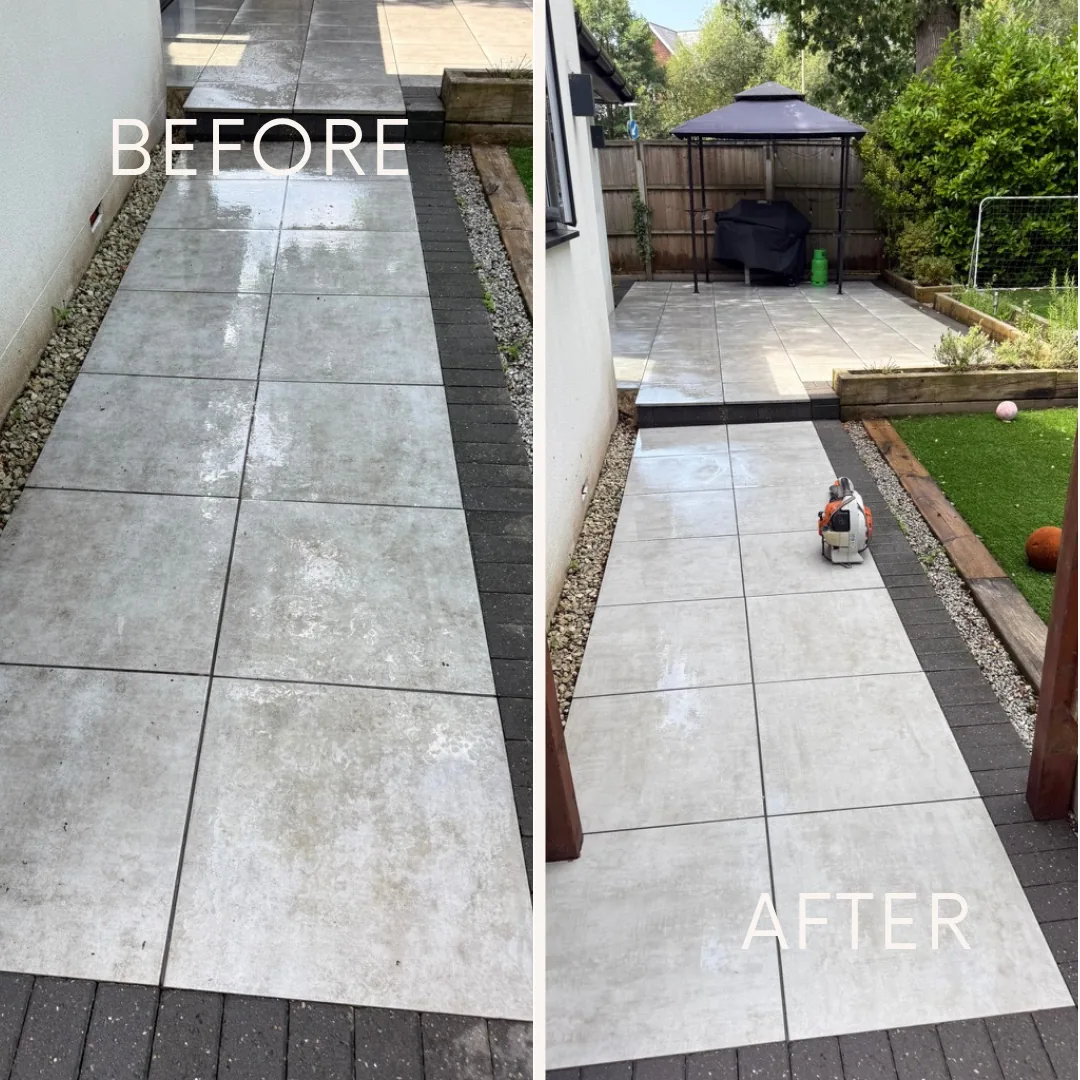
- Before and after photos and a tidy site when we leave
Dealing with regrowth
Removing the visible moss doesn't remove the spores. If nothing else is done, a shady elevation will start turning green again. That's where a biocide treatment helps: applied after the clean, it kills what's left on the surface and slows moss and algae coming back.
We'll tell you honestly whether your roof needs it. A sunny, exposed pitch may not; a north-facing roof under trees usually benefits.
When moss is hiding a problem
Moss sometimes conceals slipped, cracked or missing tiles, or tired pointing along the ridge. Because we also carry out roof repairs, we can point these out once the roof is clear and explain what's worth doing. We won't clean over a fault and leave you to discover it after the next storm.
Quotes and coverage
Call 07752 853583, send a WhatsApp or use the form below for a free, no-obligation quote. We're based in Petersfield, cover Hampshire, Surrey and Sussex including Liss and Emsworth, and hold £5,000,000 public liability insurance.
Before you book: what to look out for
From the ground you can often tell how far things have gone. Moss sitting in neat tufts on the tile surface is at an early stage. Thick green mounds that bridge the gaps between tiles, clumps lying on the lawn or path after windy weather, and gutters sprouting growth all suggest the roof needs attention soon.
Try not to tackle it yourself from a ladder or by climbing onto the roof. Walking on tiles can crack them, and scraping from an unsafe position is how accidents happen. A pressure washer hired for the weekend is the other common mistake, for the reasons explained above.
Take a photo from the garden and send it with your enquiry if you like. It gives us an early idea of the job before we come out to look properly.
Common questions
Do you ever pressure wash roof tiles?
No. Moss is removed by hand to protect the tiles, with soft washing only where it suits the roof.
Do I need a biocide after moss removal?
Not always. It's recommended where regrowth is likely, such as shaded roofs, and we'll say plainly if we think it's unnecessary.
What happens to the moss?
It's cleared from the roof, valleys and gutters and the ground is left tidy.
Can you tell moss from lichen?
Yes, and they're treated differently. Our guide on telling them apart explains how.
Related reading
Based in Petersfield, working across Hampshire · Surrey · Sussex, insured to £5,000,000 public liability.